Every agency running AI on client accounts has the same quiet fear: the AI stops working and nobody notices until the client does. NestSentry exists because that fear is well founded, and because nothing was watching.
The Problem
AI agents answering leads is now standard practice for HighLevel agencies. A lead comes in at eleven at night, the AI replies in seconds, the client wakes up to a booked appointment. When it works, it’s the best argument for the whole service.
The trouble is what happens when it stops. An API key expires. A workflow gets edited by someone on the client’s side. A rate limit is hit. The automation doesn’t crash loudly — it just goes quiet. Messages keep arriving and nothing answers them.
Nobody finds out immediately, because nobody sits watching a conversation feed. The agency finds out days later, usually from the client, usually phrased as a question about why they’re paying for this. By then a week of leads has gone cold, and the damage is to the relationship as much as to the pipeline.
Standard monitoring doesn’t catch it either. Uptime tools check whether a server responds. They can’t tell you that a conversation has been sitting unanswered for forty minutes, because from the infrastructure’s point of view nothing is wrong.
What We Built
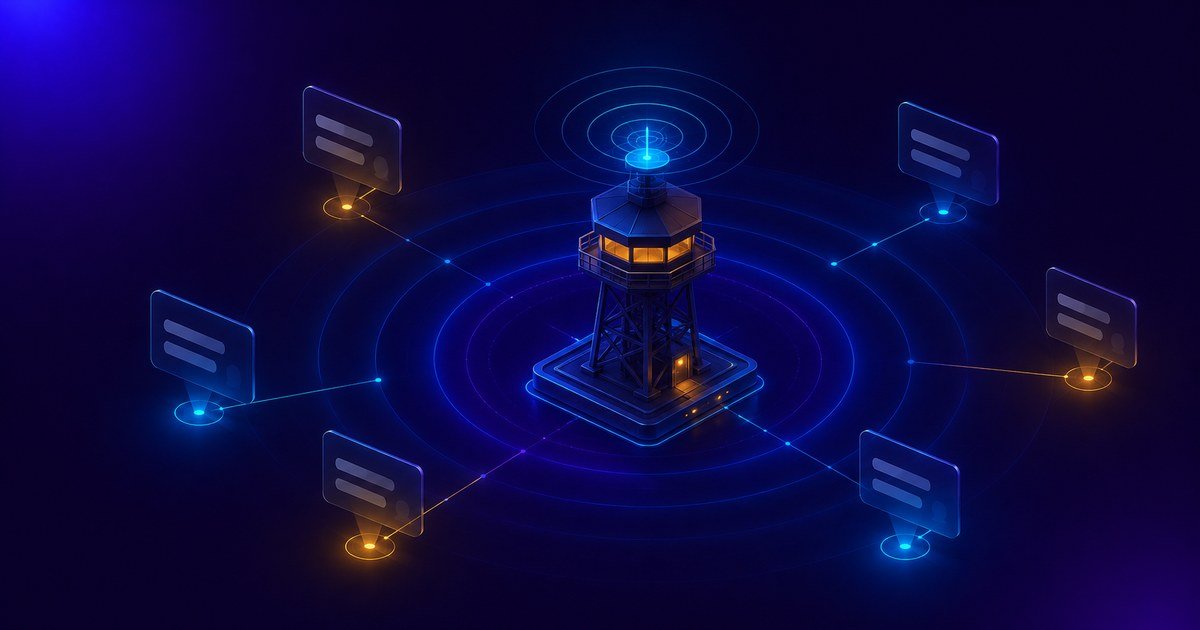
NestSentry watches the conversations, not the servers. It sits across an agency’s HighLevel sub-accounts and raises the alarm when a lead goes unanswered past a threshold the agency sets.
- No-reply detection. “Tell me if a message goes unanswered for ten minutes.” That’s the whole configuration. One number per account.
- Infrastructure health checks. Scheduled pings to the AI backend, so a silent failure surfaces before it costs a lead rather than after.
- SMS alerts, aggregated. A text when it matters, with the numbers attached so the severity is clear from the notification. One alert per account, not one per message — an alert system that cries wolf gets muted, and a muted alert system is worse than none.
- Response-time analytics across sub-accounts. Which client is being served well and which isn’t, visible in one place instead of inferred from complaints.
One design decision shaped everything else: NestSentry processes metadata only, never message content. Whether a message was answered and how long it took is enough to do the job. What the message said is not our business, and not storing it removes an entire category of privacy risk for the agency and its clients.
The Stack
Same foundation as the rest of our products: Python with FastAPI, PostgreSQL, and a Bootstrap 5 interface. Stripe handles subscriptions and the trial, Cloudflare sits in front, and everything is versioned and deployed from GitHub.
What makes this one different from a normal web application is that most of the work happens when nobody is looking at it. Scheduled jobs run continuously in the background, checking conversation state and pinging AI backends on a fixed cadence. A monitoring product that only works while its dashboard is open would be worse than useless, so the reliability of that scheduler is effectively the product.
The alerting layer needed its own restraint. Raising an alert per unanswered message would generate noise that agencies mute within a week, and a muted alert is the same as no alert. So alerts are aggregated per account and rate-limited by design, with the raw numbers attached to the message so severity is clear without opening anything.
And the data model is shaped by that one privacy decision: metadata only. Timestamps, message direction and account identifiers are enough to answer “has this been replied to, and how long has it been waiting”. Message content is never requested, never stored, and never leaves the client’s own systems. It reduces what the product can do — and removes an entire class of risk we’d otherwise be carrying on behalf of every agency using it.
The integration is installed as a HighLevel app, so setup takes minutes and requires no code, no API keys to copy and no workflows to rebuild. Anything that makes an agency touch their existing automation to add monitoring is a non-starter — the whole point is to reduce risk, not introduce it.
The Result
NestSentry is live at nestsentry.com, with plans scaling by sub-accounts and alert volume, and a seven-day trial with no card required.
It’s the narrowest product we’ve built, and deliberately so. It doesn’t try to be an AI platform or a CRM. It answers one question — is your AI still doing its job right now — for one audience that has that question and no good way to answer it. Building for a specific frustration you can name beats building for a market you can only describe.